


Overmedication in Older Adults: When Polypharmacy Gets in the Way of (or Supports) Physical Therapy

Polypharmacy in older adults is common — and often necessary. The problem begins when “a lot” is no longer “appropriate”: duplicate medications, poorly adjusted doses, interactions, side effects that go unnoticed, and symptoms that are mistaken for “aging.” In this scenario, physical therapy can become slower, less safe, and less effective — or, on the other hand, it can gain momentum when medication is properly reviewed and aligned with functional goals.
In 30 seconds: what you need to know:
Polypharmacy, commonly defined as the regular use of five or more medications, can increase the risk of falls, dizziness, fatigue, confusion, and weakness — factors that directly interfere with balance, gait, and adherence to physical therapy. But when it is appropriate and well managed, it can reduce pain, stiffness, shortness of breath, or tremor, allowing for safer and more effective rehabilitation. The key lies in medication review, communication among professionals, and monitoring throughout the rehabilitation plan.
What does “overmedication” mean?
It does not always mean “taking many medications.” In geriatrics, the risk increases when there is potentially inappropriate polypharmacy: medications with no current indication, duplicate prescriptions, interactions, doses that are too high for the person’s age or kidney function, or drugs whose risks outweigh their benefits for that particular profile. The WHO highlights polypharmacy as a safety priority and recommends structured medication reviews and teamwork among physicians, pharmacists, and other professionals.
Useful note: “Polypharmacy = 5+ medications” is a widely used definition in clinical literature, but there are variations; what matters most is appropriateness and the risk-benefit balance.
How can polypharmacy in older adults negatively interfere with physical therapy?
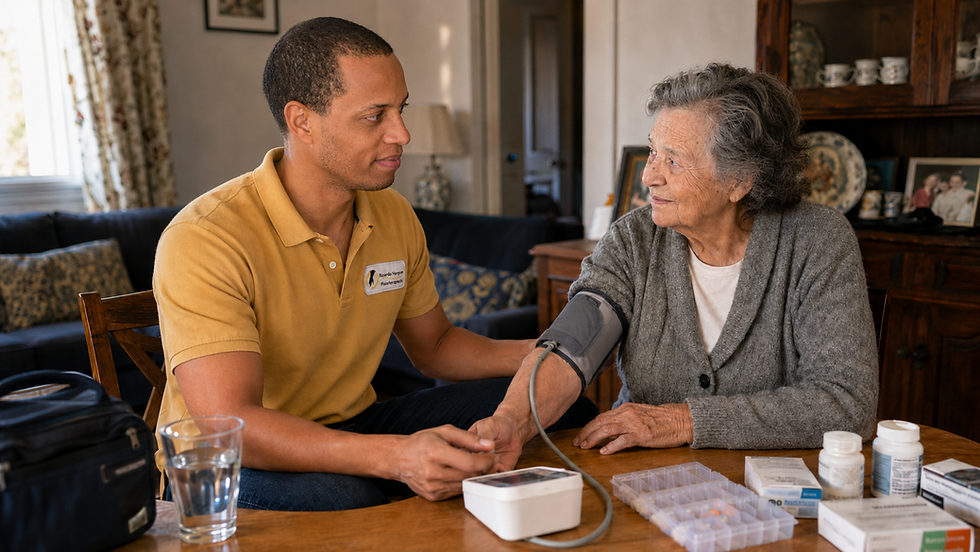
In practice, physical therapy is a “reality test” for the body: movement, effort, changes in position, dual-tasking — thinking and moving at the same time — balance, and reaction speed. Many medications affect exactly these systems.
1) Higher risk of falls and instability
Some medication classes are associated with a higher risk of falls, known as falls-risk-increasing drugs or FRIDs, especially when combined: sedatives/hypnotics, benzodiazepines, certain antidepressants, antipsychotics, opioids, antihypertensives due to hypotension, among others. If an older adult begins a session feeling drowsy, with blurred vision, or with orthostatic hypotension, gait and balance training becomes less safe, and progression becomes less consistent.
2) Dizziness, hypotension, and “blackouts” when standing up
Changes in position — lying down, sitting, standing — are routine in rehabilitation. Diuretics and antihypertensives can increase the risk of dizziness and falls if the person is dehydrated, has low blood pressure, or has recently had a dosage adjustment. In physical therapy, this requires:
slower progressions;
longer breaks;
monitoring of blood pressure and symptoms;
adjusting the timing of the physical therapy session.
3) Muscle weakness, cramps, and exercise intolerance
Some medications can contribute to myalgia (muscle pain) fatigue, or weakness, reducing physical capacity during physical therapy and recovery between sessions. The typical result is: “I used to be able to do this, but now I can’t,” which leads to frustration and poor adherence.
4) Confusion, slowed processing, and reduced motor learning
Rehabilitation depends on attention, memory, and repetition. Medications that affect the central nervous system can reduce the ability to learn movement patterns, increase fear of falling, and compromise dual-task activities, such as walking and talking at the same time. Here, the risk is not only falling; it is also failing to consolidate progress.
5) Masked pain: quick “improvement,” vulnerable body
Strong pain relief can be useful — we will get to that — but it can also mask signals that guide the dose and volume of physical therapy. The older adult “does too much” because they do not feel pain, then pays for it later with exacerbation, inflammation, or flare-ups — especially in the shoulder, spine, and osteoarthritic joints.
6) Effects that change the clinical plan and require coordination
Anticoagulants/antiplatelet agents: increased risk of bruising; caution is needed with more aggressive techniques and with falls.
Long-term corticosteroid therapy: frailty, osteoporosis, myopathy → mechanical risk and the need for more conservative progression.
Antidiabetic medications/insulin: risk of hypoglycemia with exercise; requires planning and awareness of warning signs.
This is not meant to “scare” anyone; it is about treating with strategy and safety.
When medication can have a positive impact and enhance physical therapy
The right question is not “Is medication good or bad?” but rather: Does this medication support function and participation in the rehabilitation plan?
1) Pain control that allows movement
When pain decreases from 8/10 to 4/10, the person starts walking again, doing physical activity/exercise, sleeping better — and physical therapy can finally progress. In many cases, well-timed pain relief, for example before the session, improves exercise quality and confidence.
2) Clinical stability to tolerate exercise
In heart failure, COPD — chronic obstructive pulmonary disease — or hypertension, a well-adjusted medication regimen can reduce shortness of breath, control symptoms, and allow aerobic and functional training to be performed more safely.
3) Neurology: the therapeutic window “on/off”
In conditions such as Parkinson’s disease, physical therapy can benefit greatly when performed during the window of best response to medication, when there is less rigidity and bradykinesia. This improves gait patterns, range of motion, and outdoor mobility, such as going shopping or taking walks.
4) Less fear, better adherence when medication is well chosen
There are situations in which treating anxiety, depression, or sleep disorders — with careful selection and monitoring — improves motivation, participation, and consistency, which are critical components for successful rehabilitation outcomes.
The key point: “appropriate” vs. “potentially inappropriate”
Tools such as the Beers Criteria (potentially inappropriate medications in older adults) and STOPP/START (what to stop and what to start when clinically appropriate) help clinical teams reduce risk and improve therapeutic appropriateness.
In Portugal, scientific work is underway to translate and adapt STOPP/START version 3 into European Portuguese — a sign that this topic is truly at the center of safety in geriatric care.
Practical checklist for physical therapy in older adults with polypharmacy
Use this during the initial assessment and reassessments, especially after medical appointments or emergency visits:
“Did you bring your medication list?” Include over-the-counter medications and supplements.
Has there been any dose change in the last 2–4 weeks?
Do you feel dizzy when standing up? At what times of day?
Do you feel sleepy during the morning or afternoon?
Have you had any falls or near falls in the last 6 months?
Confusion, forgetfulness, blurred vision, dry mouth, constipation? These may be signs of anticholinergic burden.
Is pain controlled, or is it more like “I don’t feel anything during the session, but I’m worse the next day”?
Monitor when indicated: BP, HR, SpO₂, blood glucose (especially during aerobic training and in people with diabetes).
Plan the session according to medication timing, such as the “on” window in Parkinson’s disease or pre-session pain relief when appropriate.
If there are red flags, such as syncope, repeated falls, or acute cognitive changes, refer to or alert the physician.
The WHO reinforces the need to identify patients at higher risk for medication review and to support collaborative care models, including pharmacists.
Do you recognize any of these signs in a family member?
Dizziness when standing up, recent falls, excessive drowsiness, or sudden loss of strength should not be ignored. A functional assessment can help determine whether the body is adapting well to medication, physical effort, and everyday tasks.
Early intervention can reduce risks and improve confidence in movement.
How can physical therapy help reduce medication dependency without making unrealistic promises?
In many chronic conditions, such as musculoskeletal pain, osteoarthritis, instability, and deconditioning, physical therapy can:
improve function and exercise tolerance;
reduce flare-ups through better load management;
teach self-care and fall-prevention strategies;
increase confidence and independence.
This does not mean “stopping medication.” It means creating a scenario in which the physician and patient can safely reassess the need, dosage, and alternatives using objective information.
Common mistakes and how to avoid them
“It’s normal, it’s just aging” → It may be a side effect.
Always exercising at the same intensity → tolerance changes depending on timing, doses, and sleep.
Ignoring over-the-counter medications and supplements → they can also interact and they count too.
Not communicating with the physician or pharmacist when there are consistent signs such as falls, hypotension, or disabling drowsiness.
Frequently Asked Questions (FAQ)
1) How many medications are “too many” for an older adult?
There is no magic number, but “five or more” is a common reference point for polypharmacy. What matters most is assessing appropriateness, interactions, and adverse effects.
2) Does polypharmacy increase the risk of falls?
Yes, especially when it includes medications that increase drowsiness or affect blood pressure or balance — FRIDs. The risk increases with medication combinations and frailty.
3) Should I stop taking medication to do better in physical therapy?
No. Never stop or change medication without medical guidance. What does make sense is to review it with a physician and/or pharmacist when there are effects that compromise safety and function.
4) Is it better to take pain medication before the session?
It depends on the case. In some patients, reducing pain before physical therapy improves participation; in others, it may mask limits and lead to excessive loading. This should be decided case by case, with clinical guidance.
5) What signs during physical therapy may suggest a medication-related problem?
Dizziness when standing up, excessive drowsiness, recent falls, new confusion, sudden weakness, or “unexplained” exercise intolerance. These signs justify communication with the physician.
6) What are the Beers Criteria and STOPP/START?
They are tools that support medication review in older adults: the Beers Criteria list potentially inappropriate medications, while STOPP/START helps identify what should be stopped and what may be missing.
Wondering whether medication is affecting mobility, balance, or recovery?
At-home physical therapy can help identify important functional signs — such as dizziness, weakness, falls, fatigue, or loss of confidence when walking — and safely adapt the rehabilitation plan, always in coordination with the physician or pharmacist when necessary.
Schedule an at-home physical therapy assessment in Lisbon and take the first step toward regaining movement, safety, and independence.
Ricardo Vargues | Fisioterapeuta
References
World Health Organization. Medication safety in polypharmacy: technical report (2019).
Varghese D, et al. Polypharmacy (StatPearls/NCBI Bookshelf, 2024).
Pazan F, Wehling M. Polypharmacy in older adults: a narrative review of definitions, epidemiology and consequences (2021).
American Geriatrics Society. 2023 Updated AGS Beers Criteria (J Am Geriatr Soc, 2023).
O’Mahony D, et al. STOPP/START criteria (versão 3; 2023).
Akın S, et al. Polypharmacy and Falls-risk-increasing Drugs in Community-dwelling Older Adults (2024).
Acta Médica Portuguesa. Protocolo de tradução/adaptação STOPP/START v3 para português europeu (2024).


Comments